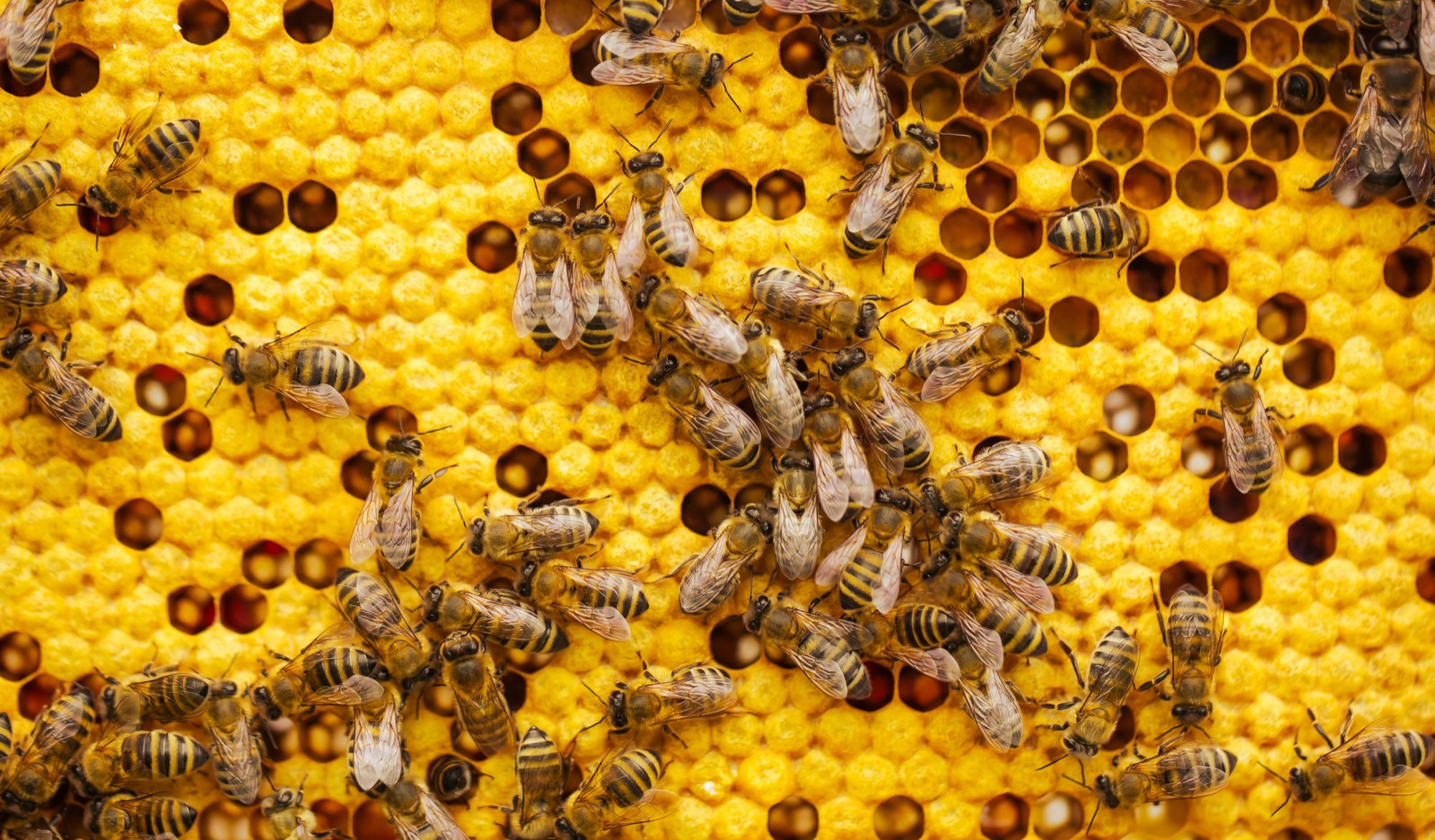
Honey fromthe roofline.
(Fig. 00) — Manifesto
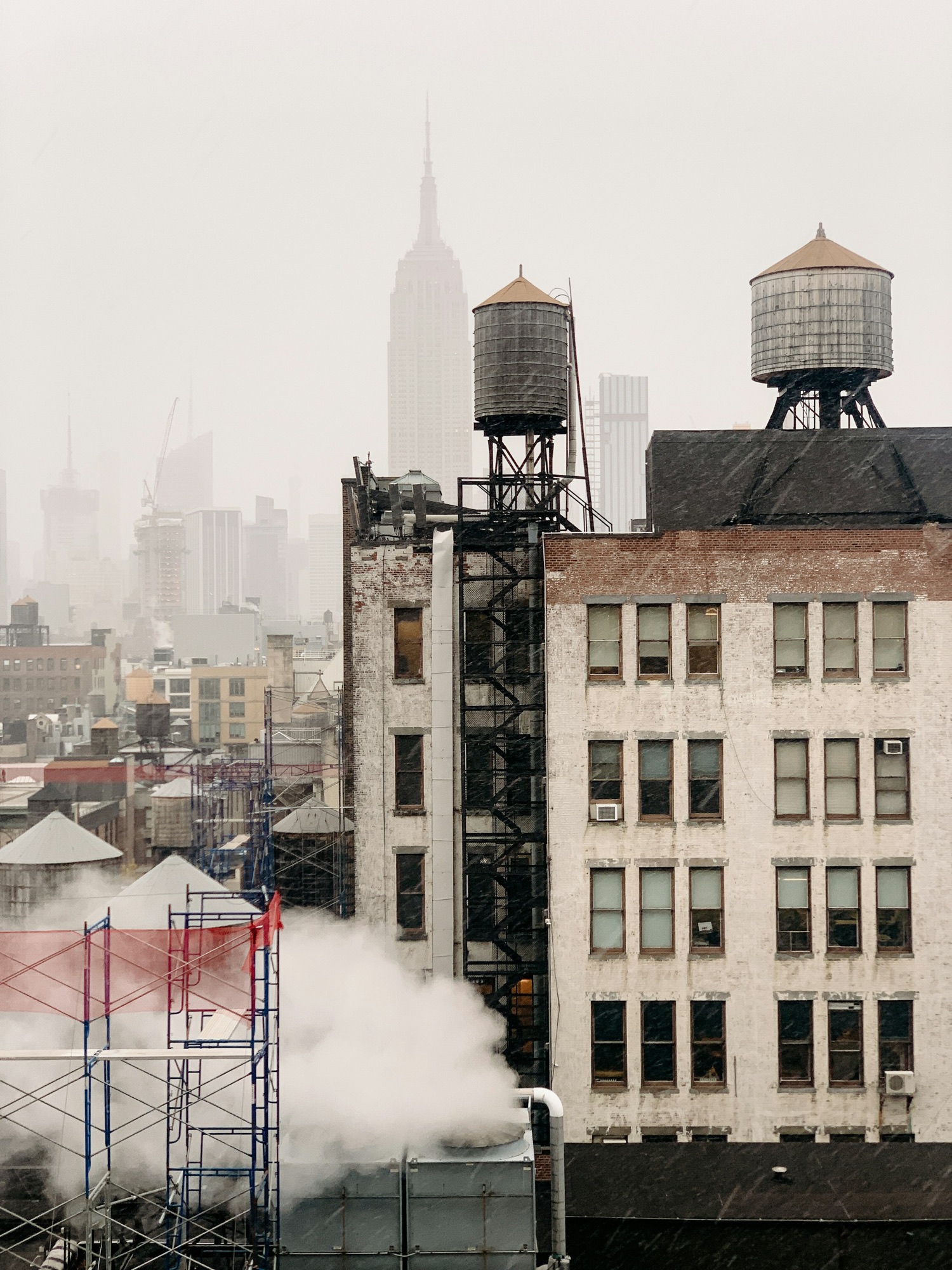
A cooperative of keepers, building owners and neighbours. We put bees on the flat roofs of New York and bottle every roof's honey on its own, so a jar tastes of four blocks.
41
Host roofs
Manhattan · Brooklyn · Queens
186
Colonies wintering
Checked every 9 days, Apr–Oct
2.9 t
Honey, 2025 season
Extracted cold, never blended
312
Member households
Each one a share of the harvest
(01) — Practice
We keep bees where the city keeps its water towers.
Roofs are warm, dry and out of reach of mowers and pesticide drift. A Manhattan colony forages on street trees and vacant lots inside a mile. Our job is everything between the hatch and the jar.
- 01Roof hostingWe survey the parapet, the wind and the load path, then install two to six hives with a fall-arrest line and a water source the bees can find.From 140 m²
- 02Colony stewardshipA named keeper visits every nine days in season — queen checks, mite counts, swarm control — and logs it where the building can read it.Apr – Oct
- 03Extraction & bottlingFrames come down the freight lift to our Gowanus honey house. Each roof is spun, settled and jarred on its own, labelled by postcode.2 runs / yr
- 04Forage plantingLinden, sumac and late asters on the blocks around each roof, so the colonies are not flying two miles for a meal in August.With 9 BIDs
- 05Open hivesSaturday mornings on the roof for members, schools and the people who live under the bees. Veils provided. Sting kit on the hook.Sat 09:00
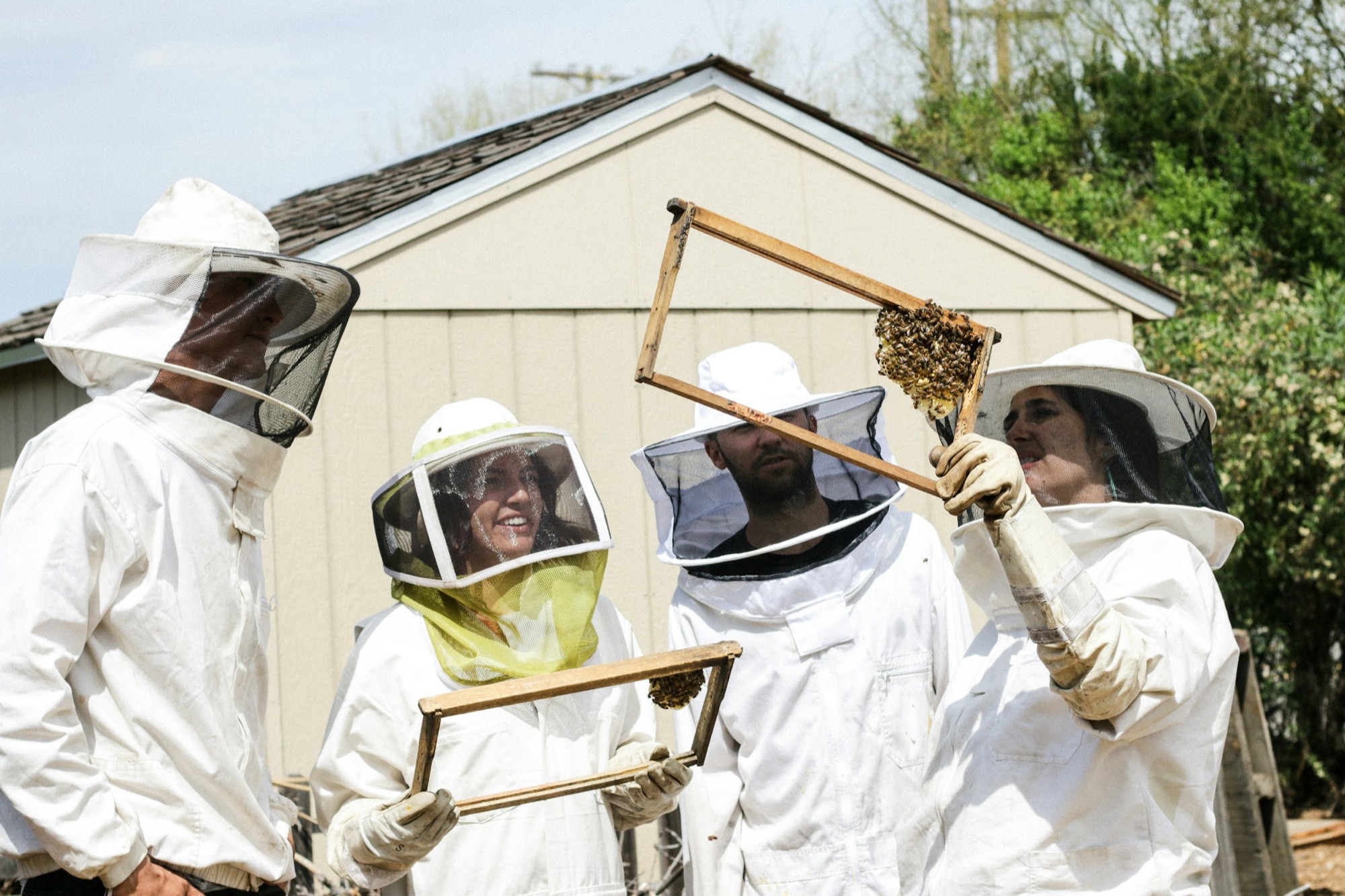
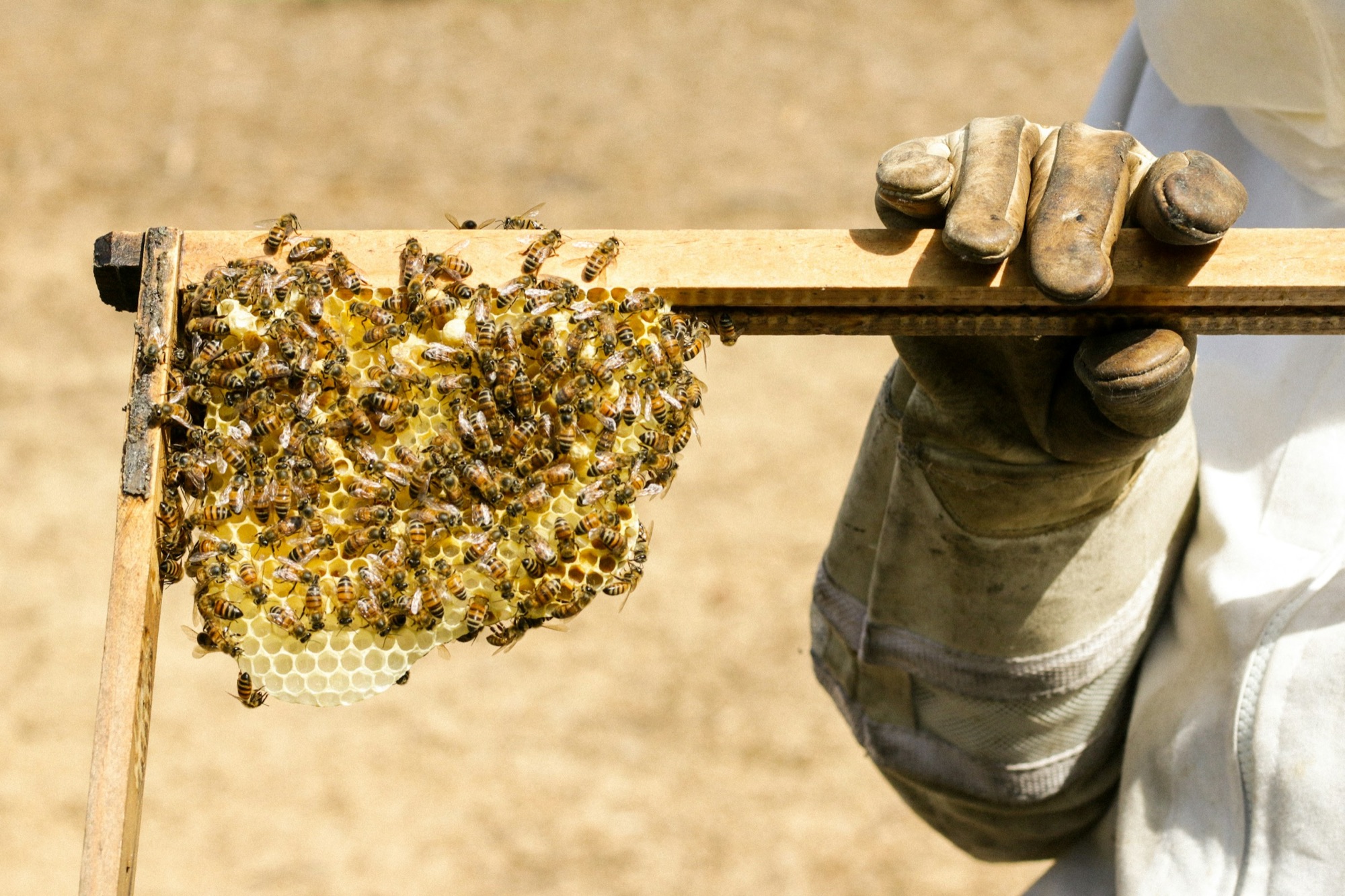
Every colony has a keeper's name on the lid. When a keeper moves away, the hive is handed over in person, on the roof, with the logbook.